

Autism is a term referring to people who’s brains work in a slightly different way. We refer to this as being ‘neurodiverse’ or ‘neurodivergent’. This can be observed through multiple behaviours such as having strong interests and difficulties with social communication. Alternatively, people who have a fairly typical brain are generally referred to as ‘neurotypical’.
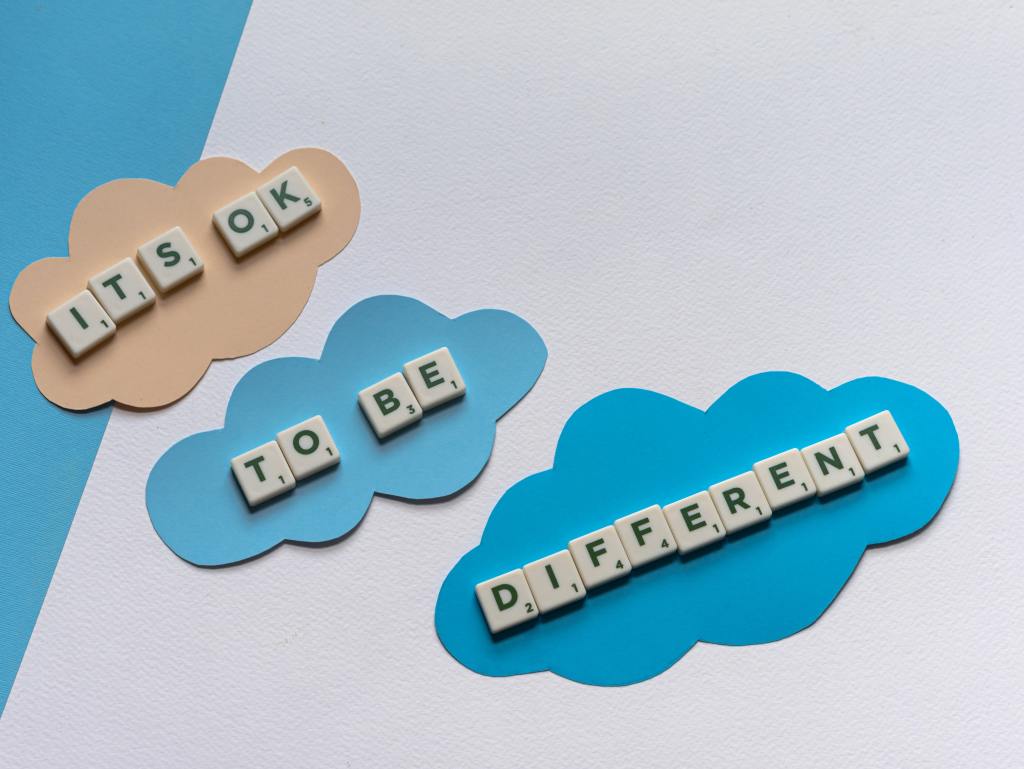
Autism Spectrum Disorder (ASD) is a diagnosable disorder; however, many people (us included) don’t like to see these differences as a disability or disorder. Rather, an autistic person just has a different way of being.
Below outlines some of the strengths and difficulties that autistic people may have. Although, do note, not every autistic person has the same traits.
Strengths for autistic people
Different strengths may include:
– Strong interest in a certain topic
– Great attention to detail
– Creative and artistic
– Very loyal to their friends
– Honest about how they feel
– Follow rules well
– Being bright and inquisitive
Difficulties for autistic people
Difficulties may include:
– Social communication, e.g. taking turns in conversations or playing games
– Find it hard to form and/or maintain friendships
– Difficulties with understanding other’s point of views
– Repetitive behaviours or difficulties experiencing change
– Sensitivity to light, touch, certain food textures, etc.
– Extreme anxiety (research shows anxiety is much more prevalent in autistic individuals than neurotypical individuals)
Does autism present the same in children and adults?
Autism does present similarly in adults and children; however, as individuals grow older, their contexts also change. So whilst we may see difficulties in turn-taking during play for some autistic children, adults don’t typically play as much, so we may see the behaviours in different contexts, e.g. difficulties turn-taking in conversations.
Does autism present the same in males and female?
Not quite. A lot of the information about autism often focuses on the male experience, and females have generally been more misunderstood.
Here is a great video about women talking about their autism if you want to take a look.
Females can tend to mask more than males meaning that they hide some of their neurodiverse traits, to try to fit in with their peers. We see this a lot with teenage girls particularly, where peer relationships are a huge part of their lives. For this reason, girls, or their friends/family/school around them, may not realise they are autistic and therefore tend to be diagnosed later in life. However, it’s absolutely normal and possible for autistic males to also mask.
How do you receive a diagnosis of Autism?
A diagnosis for autism is usually made by a range of professionals including psychologists, speech and language therapists and psychiatrists. The assessments are usually multi-faceted and can include questionnaires, developmental histories, and observations. This can be done in the NHS or in private practices.
Some people welcome a diagnosis to make better sense of their strengths and difficulties. Conversely, some people hate the idea of a diagnosis. There is no right or wrong answer, but should be up to the individual as to whether they pursue an assessment. Reading more about the topic of autism can be helpful in making that decision.
Some suggested places to read more about autism:
- Autism.org.uk for general autism information
- Young Minds for an interesting read about autism and mental health in young people
- Raising children for information on parenting an autistic child
How do Brighter Life Therapy help people with autism?
We particularly see more children and adolescents with autism or autistic traits (i.e. not diagnosed), than adults. We often see them for the anxiety or low mood they may be feeling, as this is what we predominantly work with.
Ideally, we support the individuals (and their families if involved) to consider making adaptations in their different environments, e.g. home, school and/or work. We believe neurodiverse individuals shouldn’t have to change themselves to fit themselves into a neurotypical world, as this can have a negative impact on their mood and identity. Rather, let’s change the environment to suit their neurodiverse brain.
If the anxiety or low mood still persists after numerous changes, this is something that can then be tackled with CBT or counselling therapies, which you can read about here.
If you are interested, please do not hesitate to contact us via the online booking form below. You can also follow us on our Instagram and Facebook for more information about interventions and mental health, and join our mailing list to follow our blogs (link below).

Get in touch to discuss your counselling needs
and find the right therapist for you
Please fill in the details below, then press ‘submit the form’. Our Clinic Manager, Rhianna, will review the form and be in touch via email within 1 working day to discuss her recommendations. If we can help, we will provide you with a link to book an assessment with the most appropriate therapist.
Thank you for your response. ✨

Join our mailing list
Get new blog content delivered directly to your inbox, including a free resource to boost your self-esteem that includes a quiz and a CBT technique.
You’ll also be the first to hear about new blog articles, resources, tips, advice, offers and updates on our service including our widely anticipated self-paced online courses which cost the fraction of 1:1 therapy.
Just pop your email in the box below, and don’t forget to check your junk inbox it it doesn’t arrive soon.