

Anger, like any emotion, plays a specific function and can be helpful to us. It can motivate us to act on injustice and achieve positive change.
It can also act as an innate tool to keep us safe, indicating to us that we are in potential danger, thus triggering our flight or fight response.
However, there are times when anger is not so functional, and when acted on or used in a dysfunctional way, can actually cause more harm than good.
It also has some connection to various mental health issues. But how are they connected, and what strategies are out there to help us manage our anger?
What does anger look like and what are the causes?
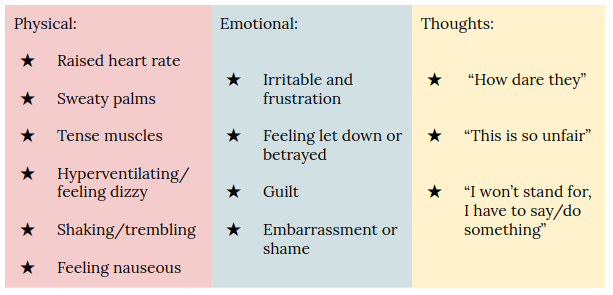
There are numerous symptoms and sensations experienced when angry such as those listed in the table below:
We can feel angry due to numerous triggers, e.g:
- Injustice or feeling let down.
- Other emotions e.g. embarrassment, shame
- Highly emotional or stressful situations (the death of a loved one, partner separation)
- Unresolved difficulties experienced at a young age
- Mental health difficulties: when feeling low or anxious for a considerable amount of time, it may take far less for us to become angry and snap than we would when feeling calm and upbeat. Often, clients report being ‘snappy’ as one of their telltale signs that they’re mood is not good. Furthermore, in young people, irritability is a core feature of depression, but interestingly, it is not in adults.
- Intermittent Explosive Disorder: this is mental health disorder characterised by sudden bursts of impulsive anger episodes, seemingly out of no where. This is a rarer situation that requires specific symptoms to be diagnosed (e.g. two physical or verbal outbursts weekly for three months).
Sometimes there is an obvious trigger, like those listed above. Other times, less so. It can be a case of things building up over time, whereby a minor issue can lead to an angry outburst.
When does anger become unhelpful?
There is a point where anger becomes unhelpful and dysfunctional, like many emotions. If concerned about how you behave when angry, there a few ways in which anger is projected unhealthily to look out for:
- Physical aggression. This can include aggression towards ourselves as well as others. If our physical health or the physical health of others are impacted, and violence is used, then it is a dysfunctional display of anger.
- Verbal aggression. This can be through swearing, name-calling, and shouting at people. Usually when angry, one of the negative outcomes is saying hurtful things that we don’t necessarily mean, which can cause irreparable harm to a relationship or friendship.
- Passive aggressiveness. Anger is, of course, not always projected in direct aggressive behaviour. Being passively aggressively can include being sarcastic, ignoring someone, denying requests, and being purposefully stubborn.
- Is it the first emotion you go to? Some people use anger when avoiding experiencing other uncomfortable, or maybe more difficult, emotions such as sadness or fear. Sometimes anger and aggression are used as a way of not appearing vulnerable during intense situations.
- Does it happen very frequently? If it is happening on numerous occasions and being used as a sole solution, then it might be dysfunctional. This is especially the case when finding common ground to resolve matters, where compromise and coming to an understanding could have been utilised instead.
- Having a loss of control. If it has become apparent that you have angry outbursts, it is possibly characterised by a lack of control and the ability to deescalate your own anger.
How can we manage anger?
Anger management can tackle anger in a few ways:
1) Knowing what to do, there and then, when in anger-triggering situations
2) Understanding and reflecting on why you get angry
3) Being able to spot triggers to prepare for them in future
Here are a few tips you can use from these 3 categories:
- Recognise when you’re feeling angry. Often, anger can creep up on people rather fast. Learn to recognise when you’re feeling angry, so you can respond more helpfully in the moment. Using a 0-10 thermometer scale to rate how angry you are can be helpful. Write out what 10/10 anger feels like for you (e.g. your typical thoughts, behaviours and physical symptoms), and make a plan about what you can do about your anger at that stage (such as the ideas below). Then, fill out other numbers too, e.g. 2/10, 5/10 and 7/10. Refer to this often – even if at first it is just retrospectively. Then, try and refer to this scale in the moment of anger, so you can act appropriately.
- Identify your triggers. When you’re feeling calm, take a moment to reflect on what triggers your anger. Are there certain situations that anger you in particular? Disagreements at work, for example? Or possibly whilst driving? Creating a list like this can help you to watch out for times when you may become angry, and help you to plan how you will cope instead.
- Breathing exercises and walking away. If you feel you are getting angry, sometimes the best thing to do is walk away from the situation, take deep breaths, and return when feeling more in control and calm. Sometimes this is easier done when you are only a lower number on the aforementioned 0-10 anger scale.
- Using distraction techniques. This is certainly helpful for situations that can not be resolved or changed. You can distract yourself to help calm you down through things like listening to music, watching videos you enjoy or maybe talking to friends.
- Relaxation. This may help to calm you in general . Try to fit in self-care, relaxation activities throughout your week, and you may find improvements in your mood in general.
- Challenge angry thoughts. Take a moment to think about how true your angry thought is. Is there another perspective you’ve not considered? Is your thought a fact, or just an opinion?
What can Brighter Life Therapy do to help?
Sometimes self-help steps, like those talked about above, are not enough, and professional help is needed.
If you believe you require professional help, feel free to contact us. We provide fast access to CBT and psychotherapy treatment, which you can read about here. Please use the form below to contact us about your therapy needs.

Get in touch to discuss your counselling needs
and find the right therapist for you
Please fill in the details below, then press ‘submit the form’. Our Clinic Manager, Rhianna, will review the form and be in touch via email within 1 working day to discuss her recommendations. If we can help, we will provide you with a link to book an assessment with the most appropriate therapist.
Thank you for your response. ✨
You can also follow us on our Instagram and Facebook for more information about this topic and other mental health discussions. You can keep up to date with our other blogs by signing up to the mailing list below too:

Join our mailing list
Get new blog content delivered directly to your inbox, including a free resource to boost your self-esteem that includes a quiz and a CBT technique.
You’ll also be the first to hear about new blog articles, resources, tips, advice, offers and updates on our service including our widely anticipated self-paced online courses which cost the fraction of 1:1 therapy.
Just pop your email in the box below, and don’t forget to check your junk inbox it it doesn’t arrive soon.