
The Fear of Missing Out (FOMO) is a fairly new phenomenon that seems to be closely linked to how socially successful we perceive ourselves, and general life satisfaction. It is vastly affected by social media use, and so is particularly common among young adults. Let’s have a look at how FOMO is related to our mental health.
Definition of FOMO
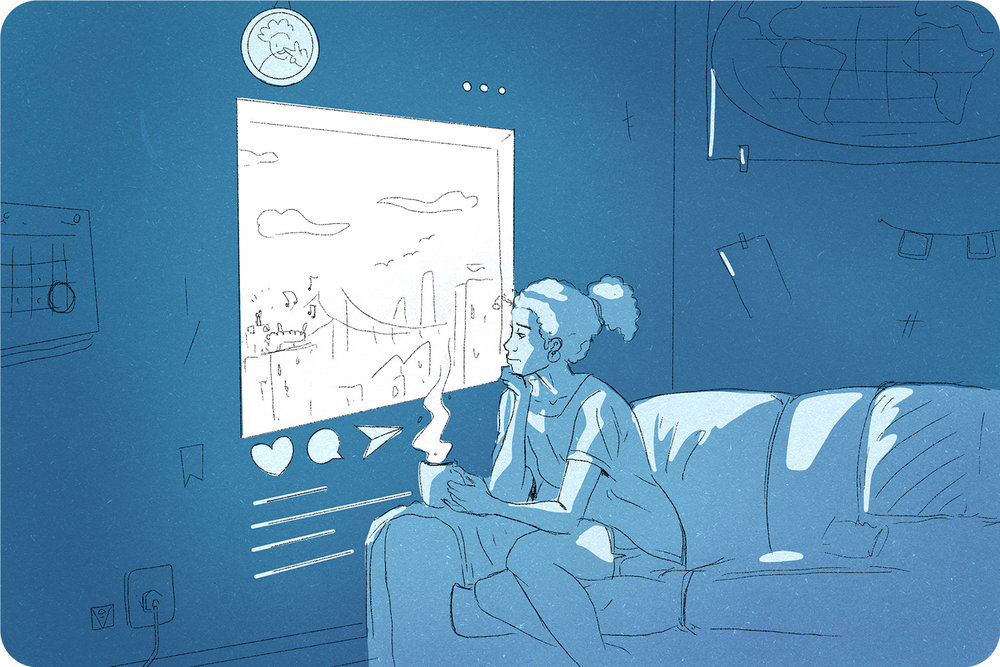
The fear of missing out or ‘FOMO’ occurs when the individual has a negative emotional reaction to the thought, or belief, that others have a more satisfying life than they do. For example, others may seem to have more exciting things going on in their lives, with more fulfilling and desirable opportunities. FOMO also includes the fear of being excluded in social situations, and worrying about how popular you are.
Those who experience FOMO may also feel insecure, stressed, anxious and low in mood, which makes it easy to see why it is seen as an aversive experience! Other signs of FOMO to look out for include:
- Low life satisfaction
- Worrying about what other’s think about you
- A lot of time spent on social media
- Always saying yes to things
What causes FOMO and how is it maintained?
FOMO is triggered in the amygdala section in the brain. When we feel excluded or dissatisfied with life, it can cause us to feel a great deal of stress, triggering the amygdala – a part of the brain that detects threat in the environment, readying us to act accordingly. This highlights the importance of feeling like we belong, and that we are fulfilled, which researcher Maslow suggests is a psychological need for humans.

One of the biggest causes of FOMO is excessive social media use, both of which seem to be in a bidirectional relationship. When a person worries they have a less fulfilling life than others, or that others have more interesting things going on, it can make them curious enough to check social media all time. Likewise, when social media is checked too frequently, this curiosity and related worries are exacerbated, thus both of them feeding into the other.
As well as problematic social media use, FOMO is also influenced by a need to connect with others, which can lead to repetitive checking of notifications and messages, and worries around whether or not your social life is as good as others’.
FOMO in connection to mental health
A fear of missing out is not a diagnosable disorder. It is, however, strongly founded by feelings of anxiety. As we have stated, this can include worries around social status, how we cope in social situations as well as our general progress with our goals. This anxiety can lead to overthinking, which can make a person feel worse.
Similarly, those with FOMO may ruminate on previous social interactions or decisions they have made (e.g. jobs they decided to apply for, how much travelling they have or haven’t done, etc). Rumination can lead to, and be a symptom of, low mood and depression.
Other things that make people more susceptible to FOMO:
- Those who have low self-esteem and compare themselves negatively to others
- Individuals who care a lot about what others’ think about them

How to take steps away from FOMO
If you have been struggling with a fear of missing out, here are a few things you can do that may help:
- Take regular breaks from social media, as it is one of the main causes of FOMO.
- Practice mindfulness – to help remain in the ‘here and now’, and encourage you to disengage from ruminating and overthinking.
- Evaluate what is really missing from your life – sometimes it is so easy to get caught up with with what you feel you should have, or what you should be doing, based on what others are doing. It can really help to take a step back and think about what you actually want, and then take manageable steps to achieving those goals.
- Prioritise face-to-face interactions. They can be very beneficial for your mental health generally and can help with practising in real social interactions.
- Keep a gratitude journal, to help focus on the good.
How can Brighter life Therapy help?
Here at Brighter Life Therapy, we can certainly help you if you are struggling, and feeling like you are missing out in life.
Brighter Life Therapy provides fast access to CBT and counselling treatment, which you can read about here. If you are interested, please do not hesitate to contact us info@brighterlifetherapy.co.uk.
You can follow us on our Instagram and Facebook for more information about motivation, mindfulness and mental health.

Get in touch to discuss your counselling needs
and find the right therapist for you
Please fill in the details below, then press ‘submit the form’. Our Clinic Manager, Rhianna, will review the form and be in touch via email within 1 working day to discuss her recommendations. If we can help, we will provide you with a link to book an assessment with the most appropriate therapist.
Thank you for your response. ✨

Join our mailing list
Get new blog content delivered directly to your inbox, including a free resource to boost your self-esteem that includes a quiz and a CBT technique.
You’ll also be the first to hear about new blog articles, resources, tips, advice, offers and updates on our service including our widely anticipated self-paced online courses which cost the fraction of 1:1 therapy.
Just pop your email in the box below, and don’t forget to check your junk inbox it it doesn’t arrive soon.